


Hey there, it’s Jacob at Retention.Blog 👋
I got tired of reading high-level strategy articles, so I started writing actionable advice I would want to read.
Every week I share practical learnings you can apply to your business.
Building a new feature is only half the battle
Getting people to actually use the feature can be harder!
How do you design a product marketing and feature launch plan?
What are the different elements that you need to think about?
If you’re a subscription app, part of the value promise you make to your users is that you’re going to be continually improving the product.
Gone are the days of buying a piece of software on a CD-ROM in box.
If you want people to stay subscribed, they need to feel like they’re getting value.
The tough part is that you can’t only improve the product.
You have to make sure everyone knows that you improved the product!
Retention.Blog is sponsored by Botsi
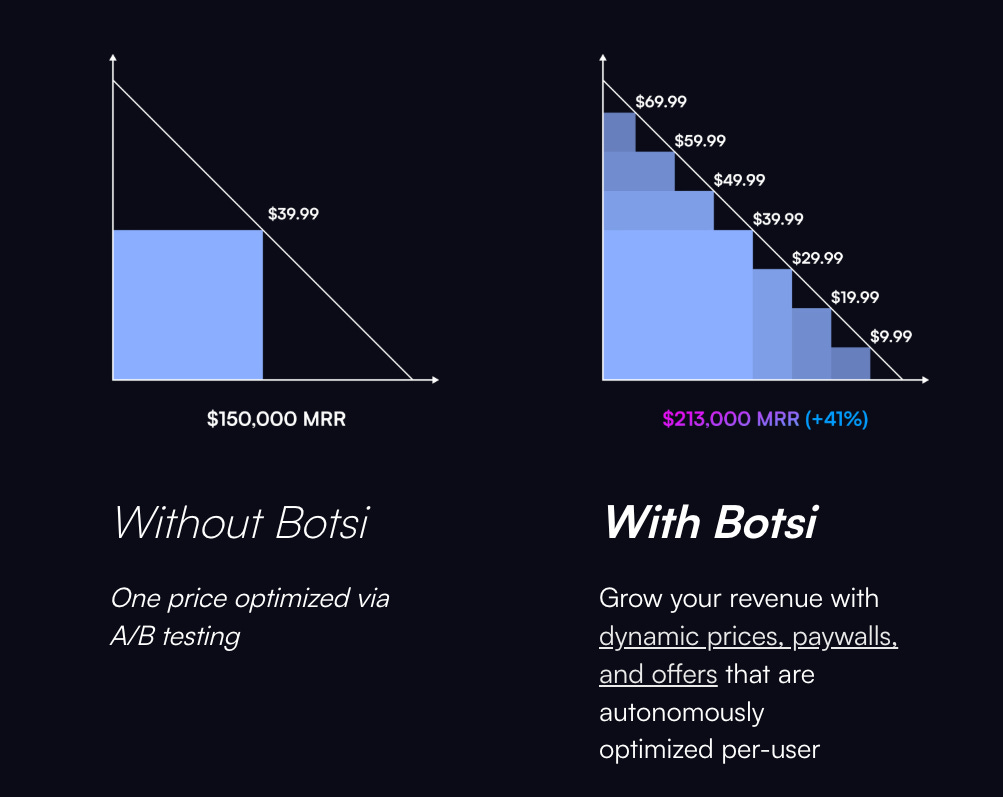
Botsi is dynamic pricing and personalized offers for your subscription app.
Botsi builds and trains custom AI/ML models on your app and your paywalls, to figure out the right offer to maximize LTV for each user.
It doesn’t only sound cool, it works! (and is 100% compliant with Apple)
Botsi combines device data (OS, model, country, etc) with your custom user data, and attribution data, to get high quality signal about the likelihood to pay and convert.
P.S. Botsi is also my company, so schedule a call, mention Retention.Blog and you’ll get a 15% discount for your entire first year!
Have questions? Send me an email directly at jacob (@) botsi.com
Where do you start with a feature launch?
Before figuring out how you should promote a new feature, you first want to do some thinking and try to answer the following questions:
Who is this feature for?
Why did you build this?
What was the issue before, and what problem does this solve?
How will you measure success? (and what is success?)
Do users need to change their behavior, or learn a new way of interacting with your product?
Is it a big deal? Or a small improvement?
Depending on your team size, who else should be involved?
What is the timing? When will people have access? Do they need an app update?
What is the messaging around this feature?
What channels and tactics will you use to promote?
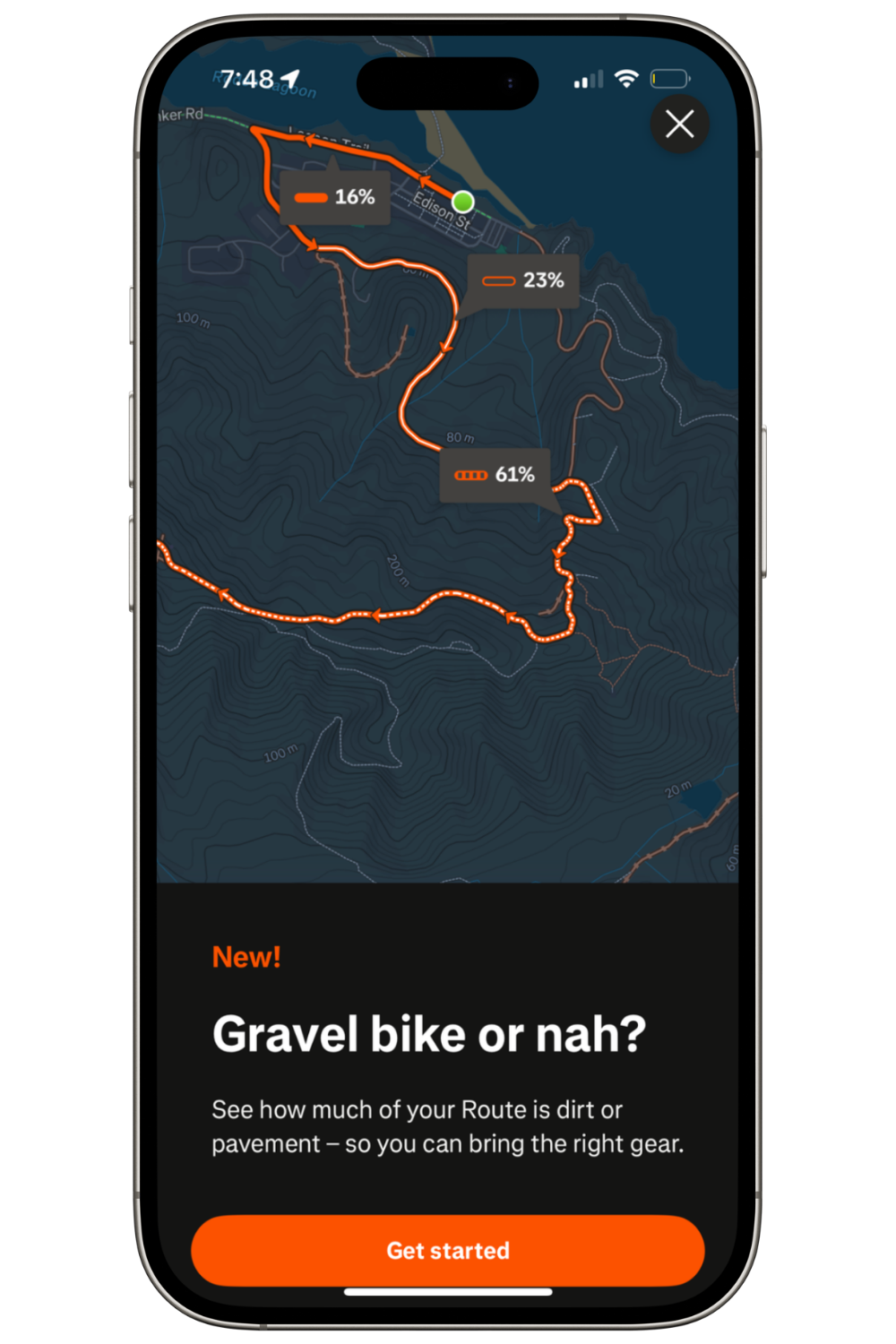
Let’s do an example together!
We can look at this new Strava feature together.
Strava rolled out the ability to see if a route requires a road bike or a mountain bike.
I can 100% imagine a world where I see this cool trail, I have my road bike, I drive all the way out and get there, then I get there and it’s all dirt and rough! 🤬
Who is this feature for?
Bike riders
Both mountain bike/trail bike riders, and road bike riders
Active bike riders, and riders who want to find new places to ride
I could see it being for both more casual riders who don’t like being surprised, but also more frequent, active users who like to plan ahead and scout new trails
Why did you build this?
We have a growing audience of bike riders, and we previously only categorized bike trails in general. We didn’t split by bike type.
We were getting user feedback that users got half way through a trail and it turned to gravel and they had to turn around
Mountain bike riders wanted to go find cool new places to try out, but couldn’t easily differentiate between road and mountain trials
What was the issue before, and what problem does this solve?
Users would either have to do more research outside of Strava to figure out the type of trail, they would ride half way through and then have to turn around, or possibly worse, they would go all the way to some route to ride, but couldn’t because they had the wrong bike
The problem it solves is uncertainty around the trail type, surprises when you get there, or having to do extra research outside of Strava on the trail
How will you measure success? (and what is success?)
Success definition: Our bike riders are less frustrated, have a better experience using the app, and use Strava to record more bike rides
Metrics:
Frequency of bike rides from existing bike riders
Monetization:
% of existing free bike riders who now start a trial
% of users engaging with feature announcement updates who start a trial (versus a baseline or control group)
Feature engagement:
% of new Strava users using the bike routes
% of existing paid bike riders using the “Surface” type toggle in bike maps
Retention:
Reduction in churn from active bike rides
Increase in retention from new/active bike riders
Do users need to change their behavior, or learn a new way of interacting with your product?
There is little behavior change needed as this is a filter on the existing maps feature that users are already using.
Is it a big deal? Or a small improvement?
It’s medium sized for a segment of the audience. Strava is majority runners, so the overall percentage of bike riders is smaller
For bike riders, this is a strong quality of life improvement that most will really appreciate
Depending on your team size, who else should be involved?
Copy and design teams to help create marketing messaging
Product teams to help deploy in-app messages
If email and push notifications are managed by a separate team, involve them
Social media manager to create some posts and promotions
Customer support to update documentation, and potentially, send an automated update to users who have previously complained
Analytics to set up measurement dashboards to track metrics
What is the timing? When will people have access? Do they need an app update?
This will be released for 10% of users first. We’ll test this for a week to ensure there are no unforeseen bugs or issues. If that look successful, this will be rolled out to the entire audience
Users will need to update their app to have access
There will not be any A/B testing besides the staged roll out.
All new users will immediately have access
What is the messaging around this feature?
Users can now see different types of trail
Emphasize bringing the right gear
Casual tone, that excited, but not too exclamatory since it’s a “medium impact” feature
What channels and tactics will you use to promote?
We won’t send a dedicated email to everyone, but will include this in the next feature release wrap up email. If these was for runners we would, but bikers still only represents 20% of our user base
For active biker riders, they’ll receive a dedicate new feature email
We’ll send a push notification to active users who have used the bike activity, or new users who haven’t recorded an activity, and are past day 7
(We have a strong new user activation flow that we know performs, so we don’t want to get in the way of that)
We’ll also trigger an in-app message to this same audience upon their next app launch. The in-app message will expire after 30 days for inactive users
🚨 New Price Power Podcast Episode:
I met Aliaksandra Lamachenka 3 years ago when her app idea was just that... an idea
She worked two, sometimes three jobs at once to make enough money to bootstrap her app. Taking a leap of faith and betting on yourself is terrifying.
But I was so excited to see when she finally launched Anticipate last year! 💙
What she'd do differently:
📜 Validate demand with a slide deck before touching the product
🤩 Look for "hell yes" reactions at every slide before building anything
🤑 Separate features users value from features users will actually pay for
📢 Choose first users for feedback quality, not install volume

Watch the full episode here:
Youtube ➡️
Spotify ➡️
Apple Podcasts ➡️
Some of you may be looking at this list above and going, “You want me to do this for every new feature?! I only have 8 people at my company!”
Yes, I understand, obviously, everyone can’t do this for every single update. This means that it’s up to you to decide whats a big enough deal that we want to promotion.
But don’t discriminate too much about what’s worthy. Users want to see that you’re improving your app!
Usually, you can measure retention or usage improvements from people who see or engage with “What’s new?” type messaging.
Also, for the “who else should be involved?” question, it’s likely to be fewer people at most app companies.
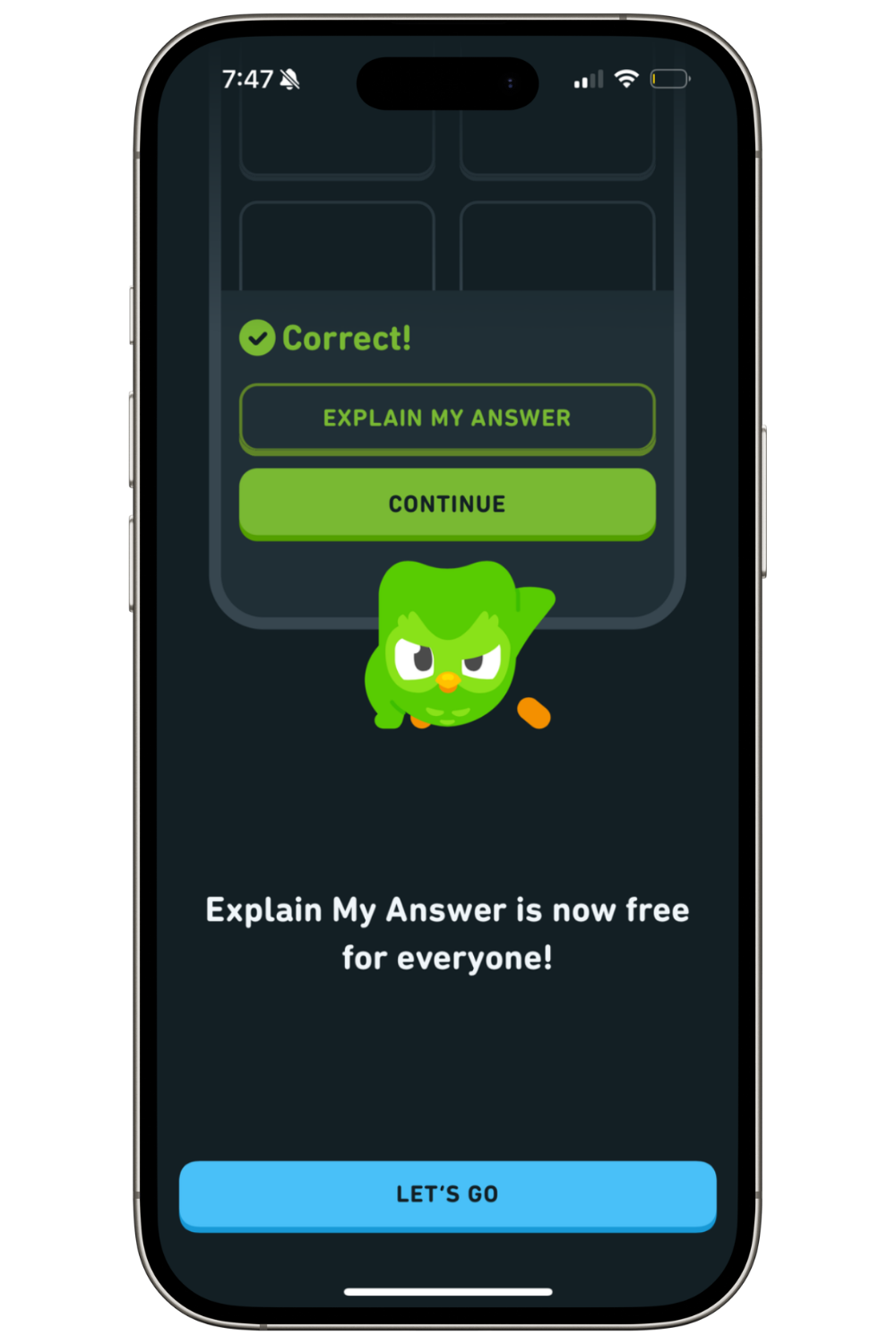
Duolingo will show new in-app messages to promote “Whats new” to you.
Look at both Strava and Duolingo’s in-app message copy: short, sweet, and to the point.
Measurement
I want to talk a little bit more about how you measure new feature success.
This is much harder than measuring monetization success because the right numbers aren’t obvious.
Still though, the gold standard for measurement of most kinds is a hold out group.
If it’s a big change, or a controversial feature, then maybe you want to A/B test the whole feature. Or launch for a small percentage of your audience.
Most of the time A/B testing every new feature is a waste of time. It makes you not accountable.
If you’re not able to A/B test everything, you have to hold the product experience and user experience to a higher standard. It’ll make you be more thoughtful and careful about what you release. Which will likely lead to higher product quality.
The exception is features that you think could have an impact on monetization.
Sooo if we’re not A/B testing a feature, how are we measuring results?
A few ways:
Pre/Post Analysis
Did we notice a meaningful change in usage or engagement patterns?
Cohort Analysis
For the cohort of new users who engaged with this feature, do they have different retention or behavior patterns to past new users?
For existing users who engage with the feature, does this change their behavior pattern compared to users who do not?
A/B testing messaging
For your target audience who is going to receive promotional messages (email, push, in-app, etc). leave a 10% holdout group who will not receive any marketing messaging. Then you can understand how users who would not have organically engaged with the feature, and were driven there by marketing, whether this had an impact on monetization, engagement, or retention?
But don’t get too obsessed with measuring every single little detail if you’re a smaller app or small team.
If you think it’s making the product better, ship it, let people know about it, and move on.
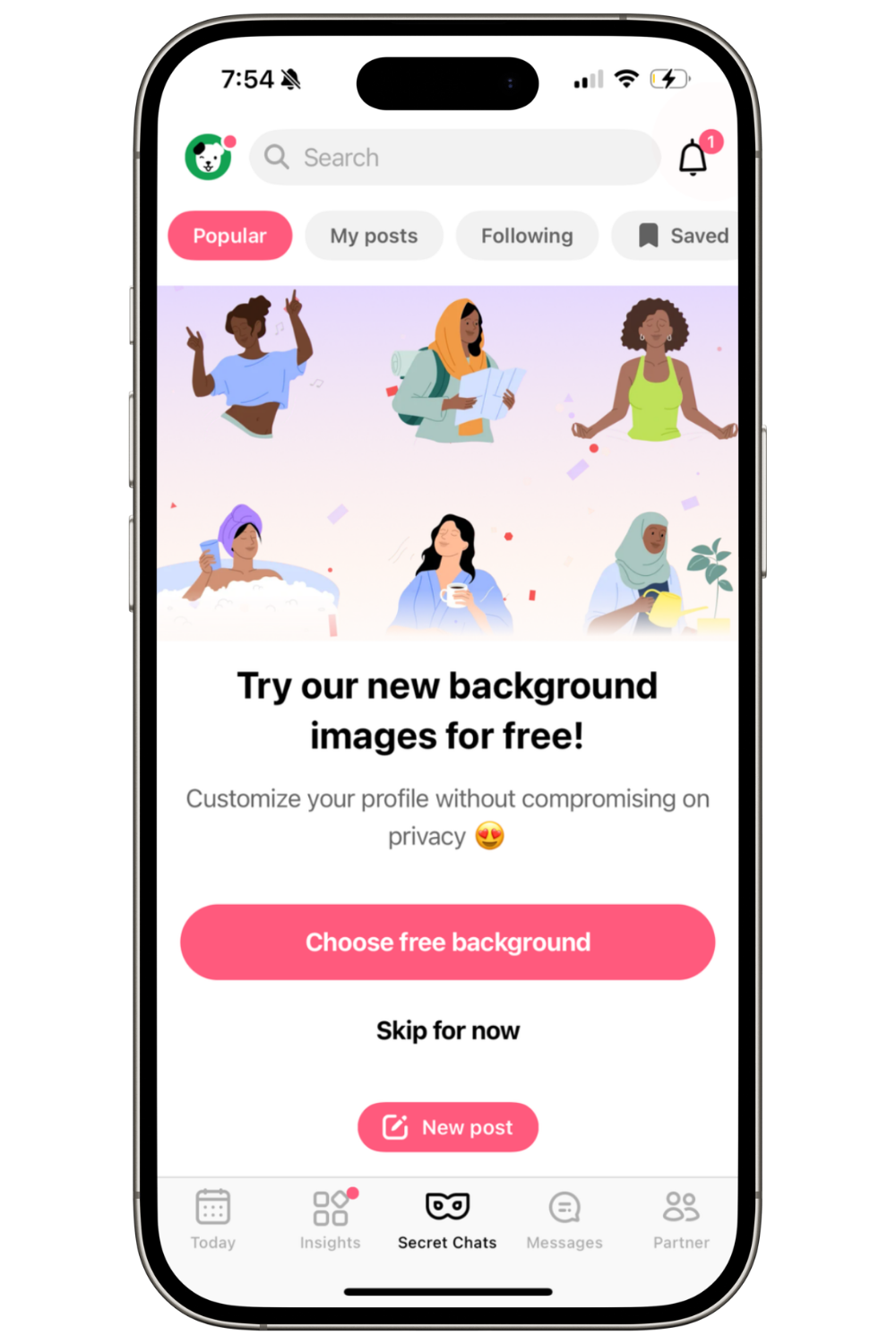
Instead of taking over your whole screen with an in-app message, they have a takeover with in a specific feature highlighting what’s new for you to try.
This is a very thoughtful approach because it allows you to discover things on your own time, vs. being bombarded at app launch when you may be there for something else.
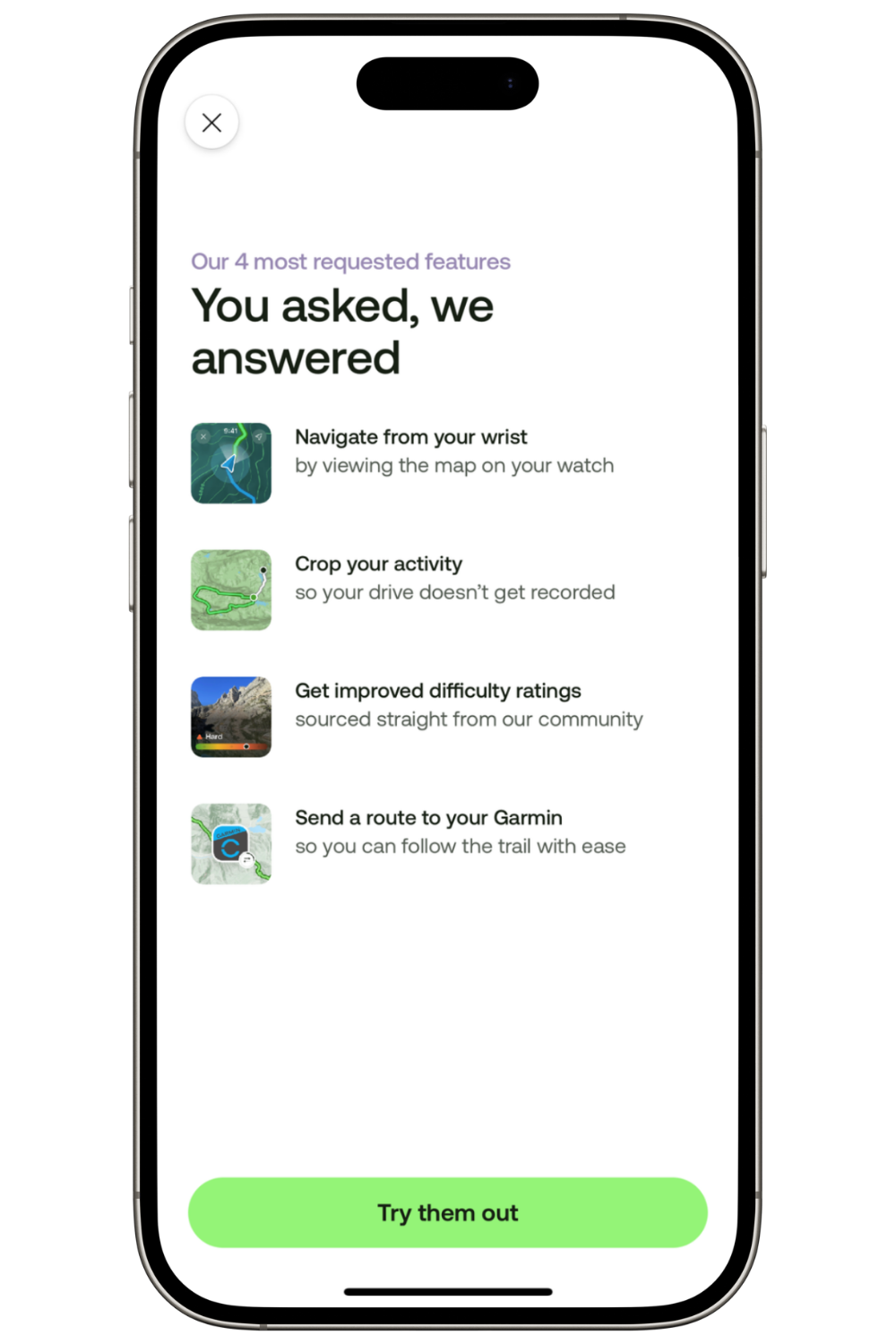
I’m not an active AllTrails users, so I’m unsure if all users saw this in-app message or only “re-engagers”
Showing the new content you’ve launched or features you’ve added is a great re-engagement tactic to bring people back.
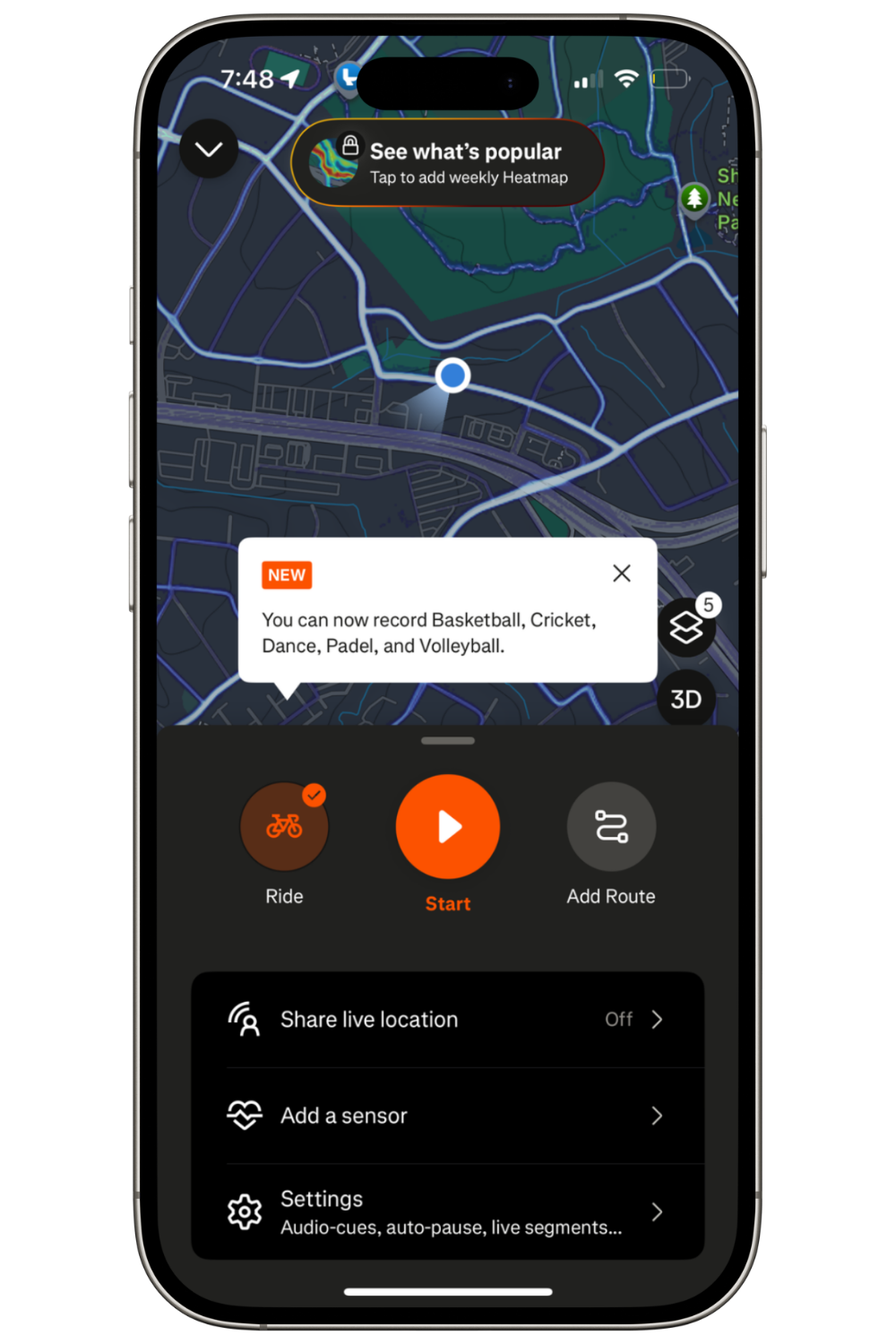
Here’s another part of Strava where they have tooltips showing new features.
Don’t think that one mode of messaging will solve everything for you.
Try to develop a hierarchy of messaging channels that you use at different times and for different purposes.
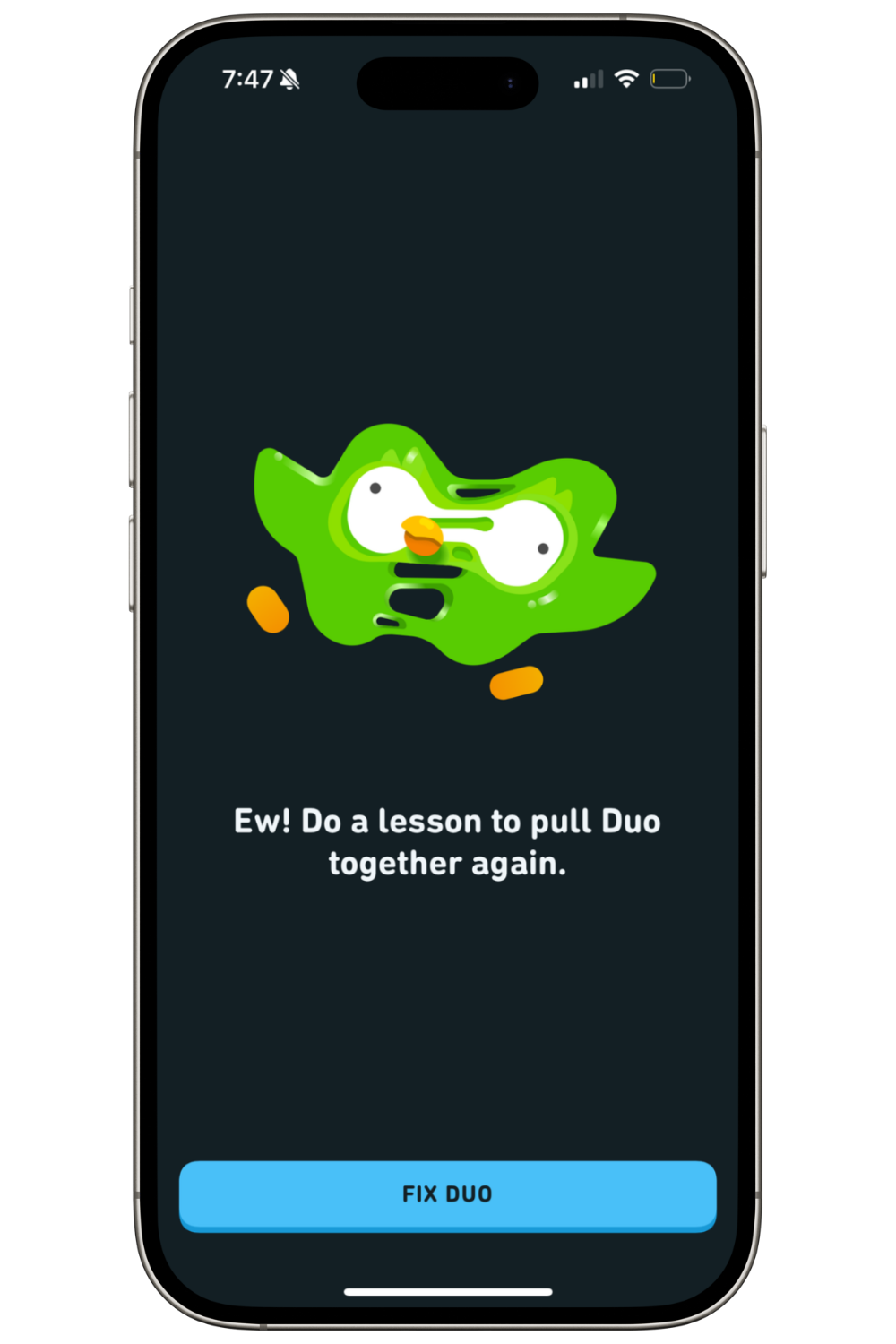
And for good measure, one last deranged Duo I came across.
They’ve gotten pretty nutty, huh?
Another article for you to check out. I mention “What’s new?” type in-app messages are good for re-engagement.
If that was interesting check out this post I wrote a while back on “re-onboarding”:
